
Cherry Hill Roofing provides roof inspection in Cherry Hill, NJ, serving surrounding cities including Haddonfield, Haddon, Collingswood, Bellmawr and Gloucester City. After more than 20 years on local roofs, we know where the houses in this area tend to fail first, and we inspect those spots from both sides of the roof deck.
An inspection is the cheapest roof work there is. It catches a cracked pipe boot before it rots the decking, a loose run of step flashing before it stains a bedroom ceiling, and ventilation problems before they cook the shingles from underneath. It also tells you how many years your roof realistically has left, which is the number that matters when you are budgeting.
Every inspection includes the attic as well as the roof surface. Water, heat and moisture all leave marks on the underside of the deck that are invisible from above, and an inspection that skips the attic misses half of what is going on.
Residential Roof Inspections
What We Check on the Roof
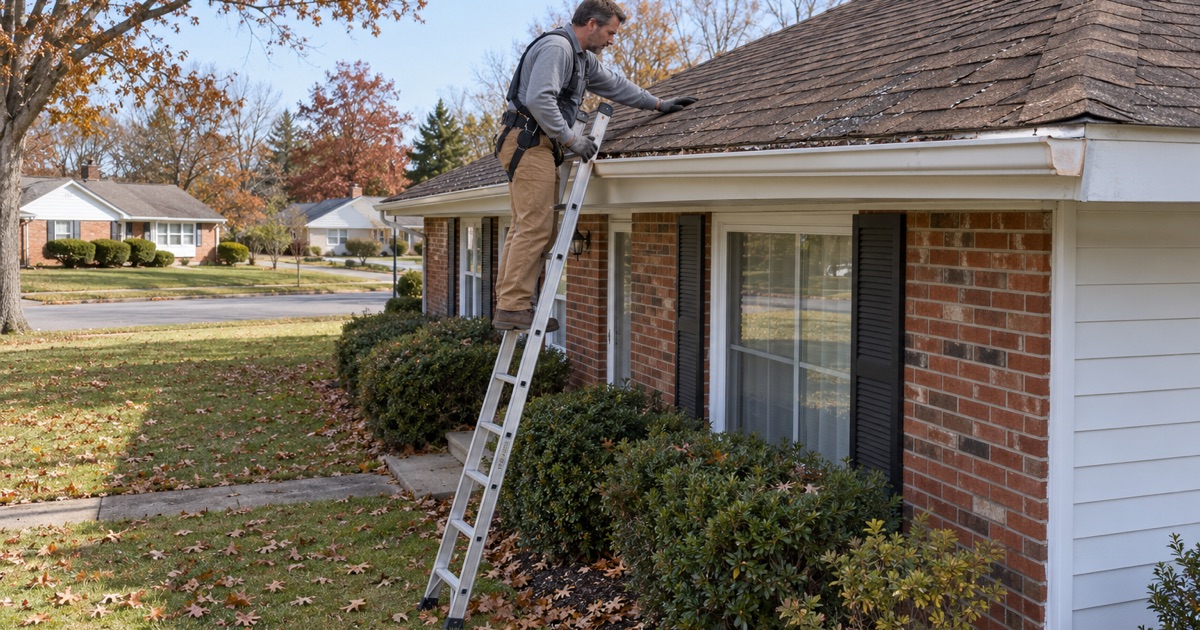
On the roof, we look at the shingles themselves first: granule loss, curling, cracking, blistering, and tabs creased or lifted by wind. We check that the ridge caps are intact and that the shingles lie flat, since a wavy surface can point to soft decking or a second layer underneath.
Then we move to the details where leaks start. Pipe boots, step flashing along walls, counter flashing at chimneys, skylight curbs, valleys and the drip edge at the eaves and rakes all get a close look. Exposed nail heads, missing kick-out flashing and old roofing cement smeared over a joint are noted in the report with photos.
What We Check in the Attic
In the attic we look for staining on the rafters and sheathing, wet or matted insulation, daylight around penetrations, and rusted nail tips that show condensation. Dark sheathing near the eaves or along the ridge often means poor airflow rather than a roof leak.
We also check the ventilation balance. Soffit vents blocked by insulation, bathroom fans that dump moist air into the attic, and a mix of gable and ridge vents working against each other are all common. These problems shorten the life of the shingles and can cause ice dams, so they belong in any honest inspection.
Gutters, Fascia and Water Management
A roof’s edge is where water leaves the house, and failures there damage more than the roof. We check that the gutters are pitched toward the outlets, firmly attached, and catching runoff from the shingle edge rather than letting it slip behind.
We look at the fascia and soffit for rot, check that the downspouts discharge away from the foundation, and note any places where overflowing gutters have stained siding or eroded the ground below. Small fixes here protect both the roof deck and the basement.
Inspections for Buying, Selling and Insuring a House
Pre-Purchase Roof Inspections
If you are buying a house, a roof inspection tells you what you are taking on. We estimate the remaining life of the roof, count the layers where we can see them at the edges and in the attic, and list the repairs that will be needed soon.
That information matters in negotiation and in financing. Lenders and appraisers pay attention to roofs: FHA appraisal guidance, for example, looks for at least two years of remaining life and no more than three layers of existing roofing. A clear report helps you plan before closing rather than after.
Storm and Insurance Inspections
After a storm, an inspection separates storm damage from ordinary wear. Creased or missing shingles, fresh punctures and damage that runs in one direction read as storm damage, while granule loss and curling across the whole roof read as age.
We photograph and write up what we find for your own claim. If you ask, we will meet your insurance adjuster on site to point out the damage, but the claim itself remains yours, since only a licensed public adjuster may negotiate it on your behalf for pay.
Inspections Before Adding Solar Panels
Solar panels are meant to stay on the roof for decades, so the roof under them needs to last as long. Before panels go on, we check the remaining life of the shingles, the condition of the decking and the flashing that the mounts will sit near.
If the roof has only a few years left, it is usually cheaper to replace it before the panels are installed than to pay for removing and reinstalling them later. The inspection gives you that answer before you sign a solar contract.
Commercial Roof Inspections
Flat Roof Membrane Surveys
Flat and low-slope roofs on small commercial buildings fail differently from shingle roofs. We walk the membrane looking for split seams, blisters, punctures and areas where water ponds after rain, and check the flashing at parapet walls, curbs and rooftop units.
We identify the membrane type, whether EPDM, TPO, PVC or modified bitumen, and note its condition, since repair materials must match it. Drains and scuppers are checked for clogs, which are one of the most common causes of commercial roof leaks.
Scheduled Maintenance Inspections
For commercial owners and property managers, a spring and fall inspection catches small problems while they are still small. Seams that have started to lift, sealant that has cracked and debris piling around drains can all be fixed cheaply on a routine visit.
Regular inspections also create a record of the roof’s condition over time. That record is useful for budgeting a replacement and can matter when a membrane warranty requires documented maintenance.
Our Step-by-Step Roof Inspection Process
Step 1: History and Interior Signs
We start by asking about the roof’s age, past repairs and any leaks you have noticed, then look at the ceilings and walls inside where stains have appeared. That history tells us where to look first once we are on the roof.
Paperwork helps too. If you have the contract or warranty from the last roof replacement, the installation year and the shingle line tell us how the roof should be performing. A roof failing well ahead of its expected life usually points to a ventilation or installation problem that a new covering alone would not fix.
Step 2: Exterior and Roof Surface
Where it is safe to walk, we inspect the roof surface, flashing and penetrations up close. On steep or fragile roofs such as slate, we inspect from a ladder at the edges and use close-up photos rather than walking on material that can crack underfoot.
We photograph every issue as we find it, with a wider shot to show where it sits on the roof and a close-up to show the failure itself. Those photos go into the report, so you see the same thing we saw without having to climb a ladder or take our word for it.
Step 3: Attic and Ventilation
In the attic, we check the underside of the deck, the insulation and the ventilation, and match any staining to what we saw above. This is often where the real cause of a leak or a short-lived roof becomes clear.
We also note anything in the attic that affects the roof indirectly: kitchen or bath exhaust ducts ending in the attic rather than outdoors, insulation pulled back from the eaves, and old wiring or recessed lights leaking warm air. Each of those raises moisture or heat under the deck and shortens the life of the shingles above.
Step 4: Written Report With Photos
You receive a written report with photos of each issue, a plain description of what it means, and our estimate of the roof’s remaining life. Repairs are listed in order of urgency, so you know what needs attention now and what can wait.
If repairs are needed, the report separates them clearly from any recommendation to replace. You can use it to get other opinions, plan a budget, or schedule the work with us, whichever suits you.
- 20+ Years on Local Roofs
- Repair-First Advice
- Itemized Written Scopes