Cherry Hill Roofing installs metal roofing in Cherry Hill, NJ, serving surrounding cities including Haddonfield, Haddon, Collingswood, Bellmawr and Gloucester City. Over more than 20 years on local roofs, we have put metal on porch roofs, low-slope rear additions, dormers, whole houses and small commercial buildings.
Metal makes the most sense where shingles struggle. A porch or addition with too little slope for asphalt, a section of roof that collects snow and ice, or a historic house that once carried a tin roof are all places where standing seam metal outperforms shingles and looks right doing it.
The material is only as good as the installation. Metal expands and contracts with every swing in temperature, so panels need clips and details that allow movement while keeping water out. That is where most metal roof problems begin, and it is where we spend our attention.
Standing Seam Metal Roofing
Concealed Fasteners and Raised Seams
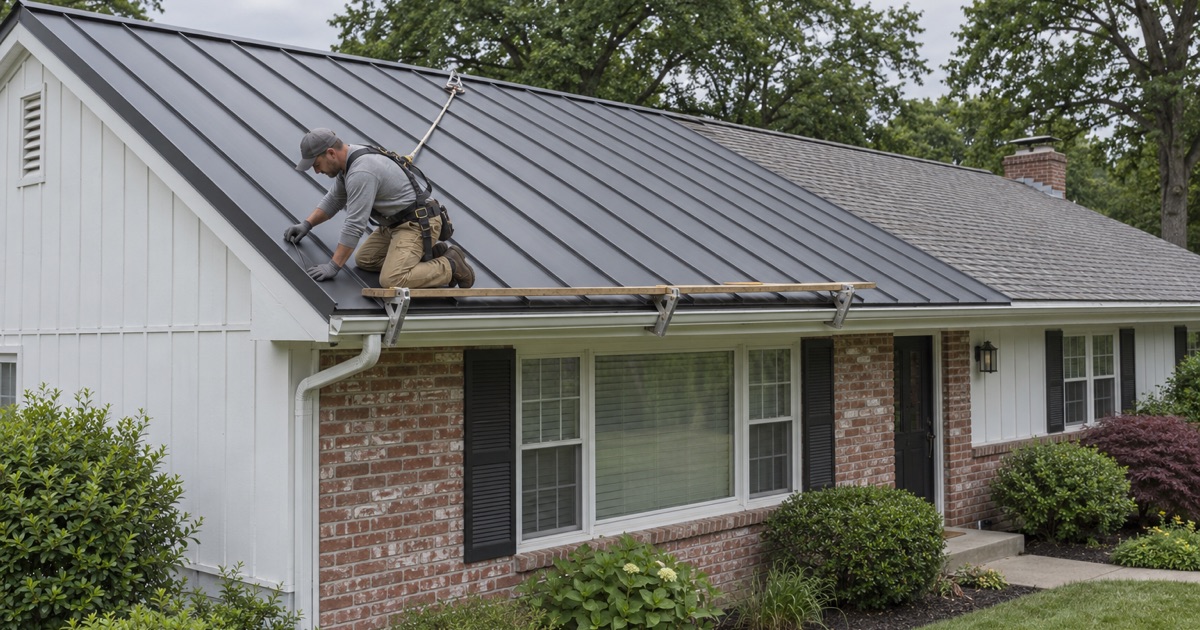
Standing seam panels run from the ridge to the eave and lock together along raised seams. The fasteners are hidden under the seams and hold the panels with clips, so there are no exposed screws to loosen or leak.
That design is why standing seam handles low slopes and heavy weather so well. Water runs down the flat of each panel between the seams, and the joints sit above the water line rather than in it.
Panel Profiles, Finishes and Colors
Standing seam panels come in different seam heights and widths, with flat or lightly ribbed pans. A narrow seam with a flat pan looks closest to a traditional tin roof, while taller seams suit modern and commercial buildings.
Painted steel and aluminum are available in a wide range of colors with factory finishes designed to resist fading. We help you choose a profile and color that suits the house, not just one that looks good on a sample chip.
Where Metal Roofing Fits on Local Houses
Porches and Low-Slope Additions
Porch roofs and rear additions often have slopes too shallow for shingles to shed water reliably. Standing seam metal is one of the best options for those areas, and it gives a crisp look against brick or clapboard.
A metal porch roof also handles the snow and ice that slide off a steeper main roof above. Where the porch meets the house wall, we install flashing tucked under the siding or counter flashing so the joint stays dry.
Whole-House Metal Roofs
A full metal roof costs more up front than architectural shingles but can last considerably longer and needs little maintenance. It suits owners planning to stay in the house for a long time, as well as houses where solar is likely to be added.
We walk through the trade-offs honestly: cost, appearance on your particular house, and how the roof will look next to the neighbors. For many houses, shingles remain the better value, and we will say so.
Metal on Historic Houses
Many older houses in the region originally had standing seam tin roofs on porches, bays and even main roofs. Replacing a failed tin roof with standing seam keeps the house’s original character.
Some historic districts set specific expectations. Haddonfield’s design guidelines, for example, ask that standing seam roofs use traditional colors such as dark red, black, silver or dark green, with narrow ribs rather than wide battens. We follow any guidelines that apply to your house.
Exposed-Fastener and Commercial Metal Roofs
Exposed-Fastener Panels
Ribbed metal panels fastened with screws through the face are less expensive than standing seam and are common on garages, sheds, agricultural buildings and some commercial roofs. They are durable but need more upkeep, since each screw has a rubber washer that ages.
We install them with the correct fastener spacing and replace dried-out fasteners on older roofs before they start to leak. Overlaps between panels are sealed with closure strips and butyl tape so wind-driven rain cannot travel along the ribs.
On a house, exposed-fastener panels are usually best kept to outbuildings and utility areas. The visible screw lines and the regular fastener maintenance make standing seam the better choice anywhere the roof is seen from the street or sits over living space.
Metal Roofing for Commercial Buildings
Small commercial buildings use metal for its long service life and low maintenance. Standing seam suits sloped commercial roofs, and metal edge, coping and flashing details are part of many flat roof systems.
We coordinate metal work with rooftop equipment and drainage, so curbs and penetrations are flashed properly and the panels shed water toward gutters and scuppers. Where panels meet a parapet or a higher wall, the transition metal is formed to fit rather than sealed in place with caulk.
Installing Metal Roofing Correctly
Underlayment, Clips and Expansion
Under a metal roof, we install a high-temperature underlayment suited to metal, along with an ice and water barrier at the eaves and valleys. Clips attach the panels to the deck while allowing them to slide as they expand and contract.
Panels fastened too rigidly can buckle, pop fasteners or tear at the seams over time. Proper clip spacing and expansion details prevent those problems from appearing a few seasons later.
Flashing, Snow and Penetrations
Metal roofs need flashing made for metal at walls, chimneys, vents and valleys. Pipe penetrations get boots designed for the panel profile, sealed without restricting panel movement.
Snow slides off metal faster than off shingles. Over doorways, walkways and lower roofs, we recommend snow guards so the snow releases gradually instead of dropping all at once.
Metal Roofing and Solar Panels
Standing seam is one of the simplest roofs to add solar to. Clamps grip the raised seams, so the racking attaches without a single hole drilled through the panels, and the roof underneath will usually outlast the solar array.
That matters because a shingle roof under solar often needs replacing before the panels reach the end of their life, which means paying to remove and reinstall them. If solar is in your plans, we can talk through panel layout and seam spacing before the metal goes on, so the two systems work together from the start.
- 20+ Years on Local Roofs
- Repair-First Advice
- Itemized Written Scopes