
Cherry Hill Roofing provides emergency roof repair in Cherry Hill, NJ, serving surrounding cities including Haddonfield, Haddon, Collingswood, Bellmawr and Gloucester City. When a storm strips shingles, a limb punches through the roof, or water starts coming through a ceiling, the first job is stopping more water from getting in, and the second is documenting what happened.
After more than 20 years of storm calls in South Jersey and the Philadelphia suburbs, we know the difference between a repair that needs to happen tonight and one that can wait for a dry day. We tarp and secure the damage as soon as it is safe to be on the roof, photograph everything, and come back for the permanent repair once the weather clears.
An emergency is also when homeowners are most likely to be pressured into signing for work they do not need. We keep the emergency work separate from any permanent repair or replacement, price it on its own, and give you time to make the larger decision once the house is dry.
What Counts as a Roof Emergency
Fallen Trees and Limbs
A falling tree or heavy limb can puncture the decking, crack rafters and leave the roof open to rain. The first priority is safety: keep people out of the rooms beneath the damage, and if branches are tangled in power lines, the utility has to clear them before anyone goes near.
Once the tree is removed, we cover the opening, check the framing for cracked rafters or broken sheathing, and photograph the damage from the roof and the attic. Structural damage is documented carefully, since it affects both the repair and your insurance claim.
Wind-Stripped Shingles and Exposed Decking
Strong wind can peel back shingles, tear off ridge caps and expose the underlayment or bare decking. A few missing shingles may hold for a day, but exposed wood takes on water quickly and can leak into the house during the next rain.
We secure loose material, cover the exposed areas, and check the rest of the roof for shingles whose seal strips have broken. Those lifted tabs are often the start of the next round of damage if they are not addressed.
Active Leaks During Heavy Rain
Sometimes there is no visible damage from the ground, just water coming through a ceiling during a heavy storm. That usually means flashing has failed at a chimney, wall or valley, or wind-driven rain is being pushed under shingles.
We trace the water from the attic to where it enters and cover that area, then return to make a permanent flashing or shingle repair. Knowing the true source keeps the tarp from going on the wrong part of the roof.
Emergency Tarping and Temporary Repairs
Tarping Done Right
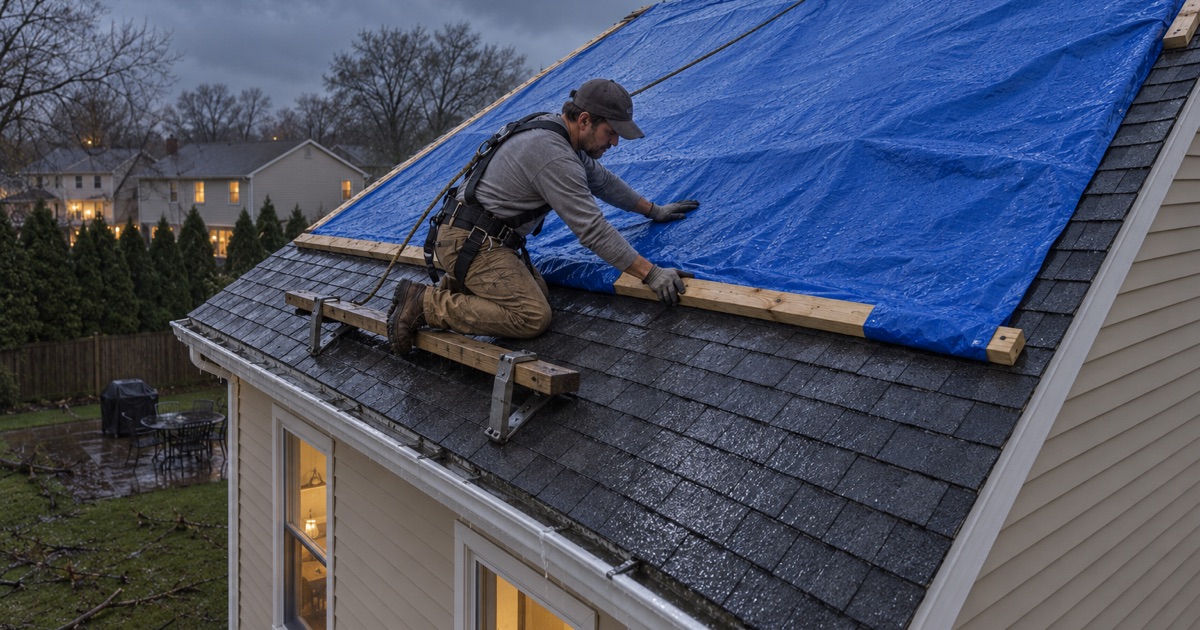
A tarp only works if it is secured properly and runs over the ridge so water cannot get underneath it. Tarps weighed down with bricks or nailed through the face blow loose in the next wind and add more holes to the roof.
We fasten tarps with battens along the edges, extend them past the damaged area and over the ridge where possible, and keep fasteners to a minimum on undamaged shingles. A well-installed tarp can protect the house for weeks while the claim and the permanent repair are arranged.
Temporary Versus Permanent Repairs
A temporary repair is meant to stop water, not to last. Once the roof is dry and safe, we remove the tarp and make the permanent repair, replacing damaged decking, underlayment, flashing and shingles with materials matched to the roof.
We list the emergency work and the permanent repair separately. That makes the costs clear for your insurance claim and means you are never asked to commit to a large repair or replacement while water is still dripping.
Protecting the Inside of the House
What to Do While You Wait
Move furniture, electronics and valuables away from the drip and put down buckets or towels. If a ceiling is bulging with water, a small hole at the lowest point lets it drain into a bucket in a controlled way, which is better than the drywall giving way all at once.
Take photos of the water damage inside as well as the damage outside. Those pictures, taken before cleanup, are among the most useful items in an insurance file.
Ceilings, Insulation and Electrical Safety
Soaked insulation loses its value and can hold moisture against the wood for weeks. After the roof is secured, wet insulation in the affected area usually needs to be removed so the attic can dry out properly.
Water near light fixtures, ceiling fans or outlets is a safety concern. Switch off the affected circuit at the panel and have an electrician check it before using it again.
Storm Damage Documentation and Insurance
Photos, Receipts and Written Notes
We photograph the damage before we touch it, during the temporary repair and after, and write up what we found and what we did. Those records, together with the receipt for the emergency work, show the insurer both the damage and the steps taken to limit it.
Most policies expect homeowners to take reasonable steps to prevent further damage after a loss. Prompt tarping, documented with photos and receipts, is exactly that kind of step.
Meeting the Adjuster and Your Claim
If you ask, our crew will meet your insurance adjuster on site to point out the damage we found. The claim itself remains yours: in New Jersey and Pennsylvania, anyone paid to negotiate a property claim on an owner’s behalf must be a licensed public adjuster, and a roofer may not take on that role.
Both states also set rules for how promptly insurers must acknowledge and settle claims, under New Jersey’s claim settlement regulations and Pennsylvania’s unfair claims settlement rules. Keeping a dated record of each contact with your insurer helps if a claim stalls.
- 20+ Years on Local Roofs
- Repair-First Advice
- Itemized Written Scopes